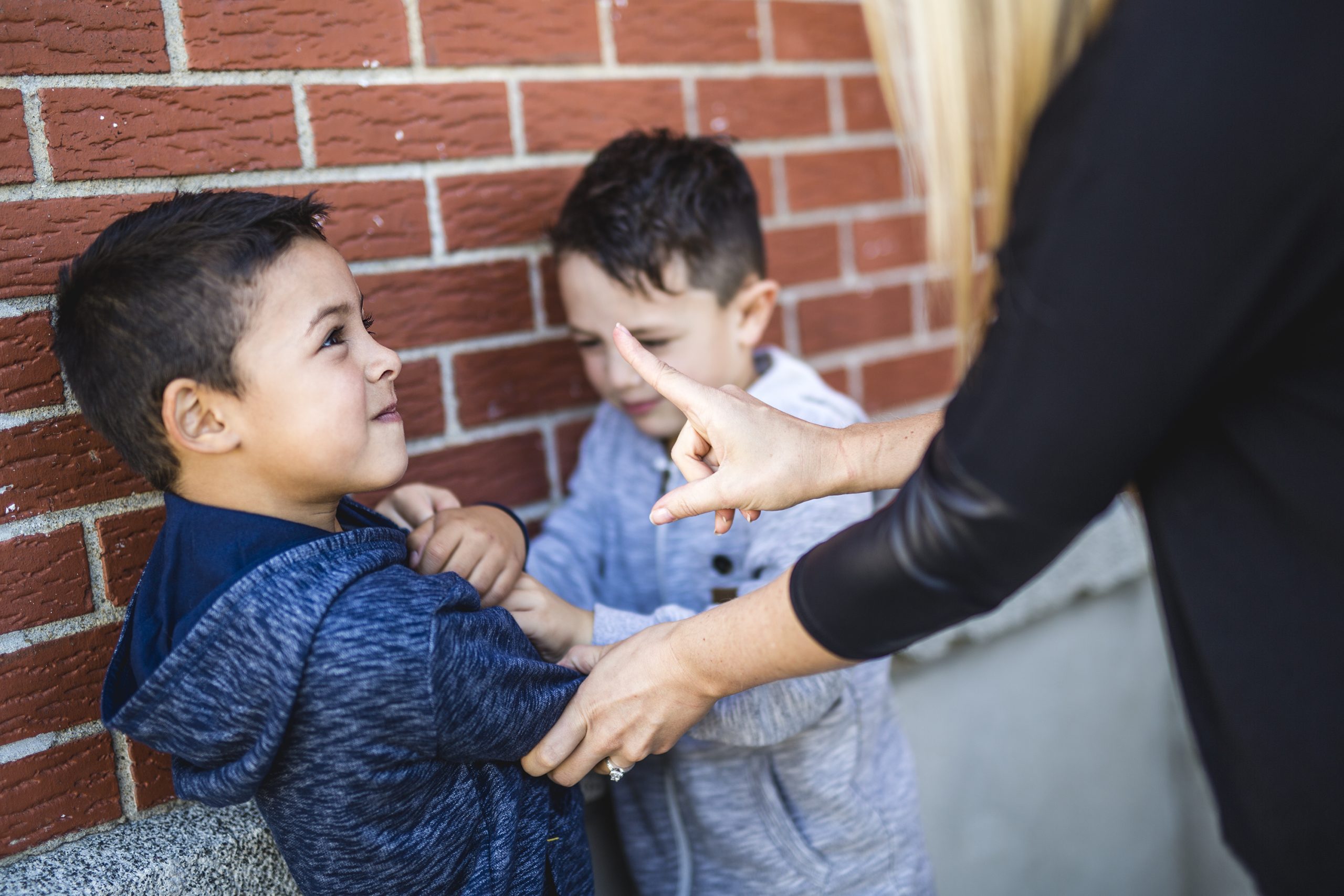
New guidance on the use of restraint and reasonable force, published recently by the Department for Education, packs a lot into 21 pages, and in many ways it is two pieces of guidance in one.
The first part of the document, Restrictive interventions, including use of reasonable force, in schools, explains the different forms of restrictive practice and when it is appropriate to use it. From page 14 onwards, the statutory aspect focuses on the recording and reporting of the use of restrictive practices, including reasonable force and seclusion, with an acceptance that there are times when its use is lawful and necessary to ensure school safety.
What are the key themes?
Safety
The guidance is clear that schools should not have a ‘no contact’ policy as there are times when physical contact between an adult in school and a child is appropriate.
They include some examples (page 7) which include comforting a distressed child, praising a child, demonstrating techniques in PE and music lessons and guiding or escorting pupils.
For each of these the adult need to consider the school’s safeguarding policy, the specific circumstances and the child’s age and material facts, such as any SEND and/ or other vulnerabilities.
The guidance recognises the legality of reasonable force in certain circumstances, but in these cases, it should be the minimum force possible for the minimum time. Restraints that affect breathing, airways or circulation must not be used, and no child should be restrained on the ground.
Any use of restraint should be within clear legal procedures. This means that there should be risk assessments to ensure that staff, who regularly work alongside pupils where the use of reasonable force and/or other restrictive interventions may be required, can do so as safely as possible.
Underlying all these is a focus on prevention, de-escalation strategies and behaviour plans.
The message is that the best way to use restrictive interventions is not to use them: ‘For any form of restraint, including seated and standing, there is a risk of physical and psychological harm, and it should be avoided where possible’ (page 7).
No punishment
While physical punishment was outlawed in all of the UK in 2003, school staff have a legal power to use reasonable force in certain circumstances notably to prevent or stop a pupil from:
- causing injury to themselves or others
- committing a criminal offence
- damaging property
- causing disorder among pupils at the school, whether during a teaching session or otherwise
Staff should never use more force than is necessary or as a sanction.
The guidance is explicit that seclusion should be a safety measure and not a punishment.
It should be ‘a non-disciplinary intervention, involving keeping a pupil confined to a place away from others and prevented from leaving..and should only be used as a safety measure to protect others from harm when a pupil is experiencing high levels of emotional or behavioural dysregulation. In such circumstances, the pupil is not acting with intent.’ (Page 8).
The child should only be placed, with supervision, somewhere that feels safe and non-threatening. As soon as the risk of harm has reduced, they should be allowed to leave.
Schools are prohibited from using seclusion as a behaviour management response, as this should only apply when the pupil is acting without intent. Removal from the classroom is different from seclusion and covered under the DfE’s behaviour guidance.
This element of the guidance leaves considerable scope for interpretation and may not provide the clarity that school leaders and staff had hoped for.
Transparency and accountability
The statutory requirements for recording and reporting are aimed at increasing transparency and accountability ensuring that schools are clear and open in their actions.
Any significant incident in which a member of staff uses force on a pupil must be recorded and reported to the child’s parents and shared with governors, who have a statutory responsibility to ensure that there is a procedure in place to do this. Reporting must be in writing, and completed as soon as practicable after the event and no later than the same day.
These responsibilities remain even if restrictive interventions are included as part of a child’s behaviour plan or risk assessment.
This statutory part of the guidance carries with it the understanding that those with SEND are disproportionately subjected to restrictive interventions. On page 11, the guidance discusses the need to understand underlying triggers, create proactive support and an inclusive environment. This should include de-escalation strategies and the guidance give some examples.
Governors should review and analyse the data about the use of force, seclusion and restraint with a particular focus on understanding patterns and triggers and their use for children with SEND or protected characteristics. The idea is that lessons should be learnt and practice improved.
What the guidance doesn’t include
- There is no explicit information about how to train school staff in reasonable force and restrictive interventions, but relies on school leaders to make decisions based on their own contexts
- There is a lack of detail on de-escalation strategies
- Details of what recording and reporting should look like are listed as a minimum but without elaboration or reporting proforma that schools can use to ensure they have acquired a fully range of evidence
- The guidance contains is no discussion or explicit consideration of the issues of adultification, racial bias or prejudice in staff responses to children’s behaviour
- Some of the terminology is open to interpretation, such as the definition of a ‘significant incident’
Actions for schools
- Review your existing policies and procedures to check how they fit with the new guidance, and update as needed. You will need a restrictive interventions and reasonable force policy, which can be standalone or embedded with the behaviour and safeguarding policies
- Ensure that the terminology used in school reflects the definitions included in page 5 of the guidance where it applies in practice, policies, procedures, staff training and communication with parents and governors. This might be a useful starting point for staff training and development of a shared understanding of terminology
- Identify any children at risk of requiring a physical intervention to support their regulation or behaviour. Then put a risk assessment and behaviour plan in place to support them and the staff who work with them
- Provide training for all staff on de-escalation strategies and consider how these are or can be embedded in whole school practice
- Create an appropriate proforma to record any significant incidents. This will include decisions about where this information will be stored, how it will be shared with parents, and governors.
The full version of this article can be found here. For more information go to https://www.seainclusion.co.uk/.