By the time children leave school, we expect them to read, write and understand numbers.
Yet every child will also need to eat and, as far as possible, make decisions about feeding themselves.
Food education is already part of the national curriculum, but does every student receive meaningful lessons they can use beyond the classroom? This is an important question for children and young people with SEND.
SEND should never be shorthand for limited ambition. It describes young people with different strengths, needs, experiences and possibilities.
Hidden talents
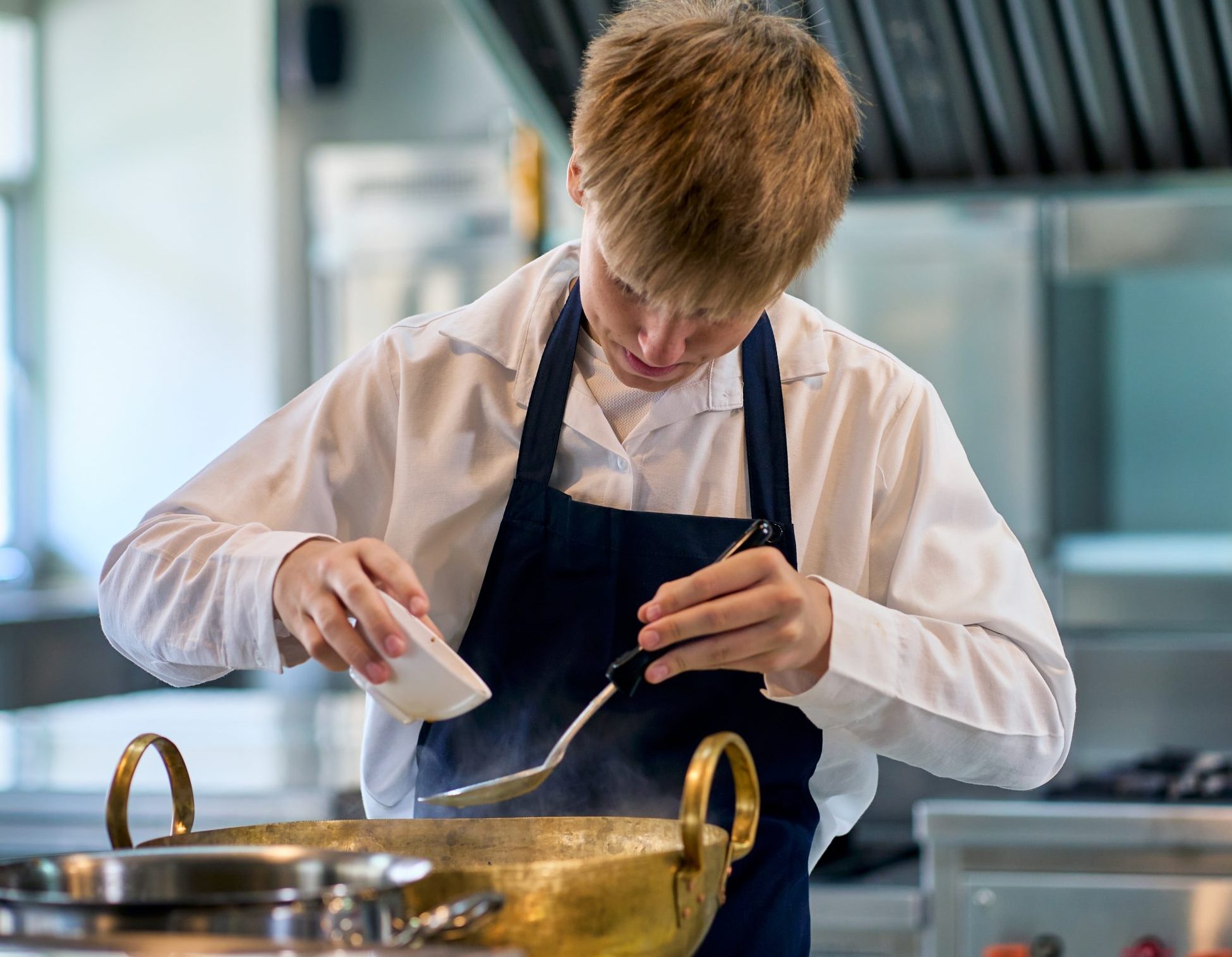
For a student whose strengths may not always be visible in a traditional classroom, the school kitchen may be the first place their talent is recognised and the beginning of a promising culinary career.
For another, success may mean discovering foods they enjoy, helping to prepare a nourishing meal and experiencing the confidence, self-esteem and better health outcomes that can follow.
One outcome is not greater than the other. Both can change a life, and both depend on being given the opportunity.
More than one in five pupils in England now have identified special educational needs, according to the Department for Education’s 2025/26 statistics. At the same time, the Government’s 2026 Schools White Paper sets out an ambition for more children and young people with SEND to learn in local mainstream settings alongside their peers, with earlier, flexible and accessible support.
Inclusive food education therefore cannot remain a concern for specialist provision alone.
We must also be clear about where the barriers sit: a child’s disability may create genuine challenges, but an inaccessible workstation, unsuitable equipment or a lack of adapted resources is not the child’s problem to solve.
Creating kitchen confidence
Across nearly 20 years in mainstream and special schools, I have seen kitchen confidence give young people greater choice, a way to contribute and more ownership over daily life. Independence will not look the same for every student; nor should it.
For one student, progress may mean preparing a meal independently. For another, it could mean using adapted equipment, selecting ingredients, following a visual sequence, operating one appliance safely or communicating what they would like to eat. A young person may always need practical assistance and still gain far greater agency.
Too often, inclusion in food education means simplifying a recipe
Independence is not all or nothing. It can mean completing a task unaided, doing it with less support or directing another person to provide the right support. The ambition should remain high, even when the route changes.
Too often, inclusion in food education means simplifying a recipe. Genuine inclusion requires us to adapt the learning itself: the equipment, instructions, sensory environment, time allowed and ways a student can participate.
Defining progress
We must also reconsider what progress means. It is not always moving from a simple dish to a more complicated one.
Progress may be completing a task with one fewer prompt, making a choice independently, recognising a safety risk or expressing a preference clearly for the first time. These are not small wins; they are steps towards agency and adult life.
We should make a clear promise to every young person: by the time you leave school, you will have developed the knowledge and skills needed to feed yourself.
For some, this will mean cooking independently. For others, it will mean participating, communicating preferences and directing support. The outcomes may differ, but the entitlement should not. Delivering that promise requires three things:
- Define it: establish what high-quality, inclusive food education looks like and what every student should have the opportunity to learn
- Resource it: give schools the trained staff, time, accessible facilities, adapted equipment and specialist support required to teach it well
- Guarantee it: ensure that opportunity does not depend on a child’s postcode, school or available facilities
An entitlement that depends on whether a school happens to have the right room, equipment or expertise is not an entitlement. It is luck and education should not leave something this important to luck.
What a young person carries out of the school kitchen can be the difference between a life in which decisions are made for them and one in which they have the skills, confidence and support to make more decisions for themselves.
Because one day, school ends, the exams finish, the textbooks close and life begins, and tomorrow, they will still have to eat.