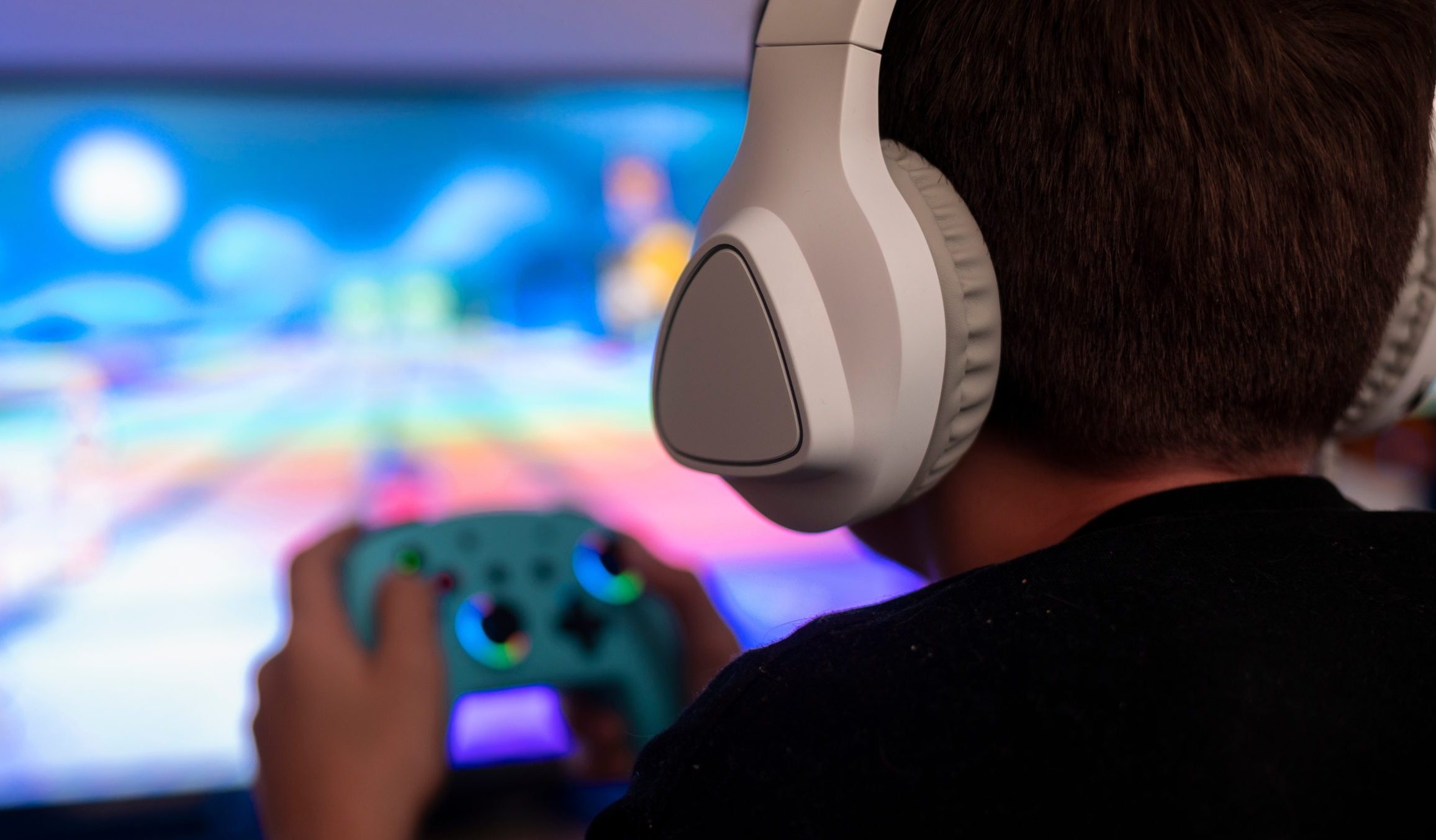
Despite its growing popularity, many people still view online gaming as a hobby rather than what it can be: a powerful vehicle for developing skills and preparing young people for their chosen career.
Home to one of Europe’s largest communities of student esports players, the UK is a leader in the gaming sector.
In 2025, UK gaming revenue grew to £5.4 million – an increase of 86% over a decade, while the esports market in the UK is expected to double in size by 2029.
For many autistic people, online gaming offers a safe environment, and many autistic young people share that gaming is a special interest of theirs.
With that in mind, is it surprising that they may wish to pursue a career in the gaming industry?
In fact, the gaming industry’s trade body, UKIE, found that nearly a fifth of people in the gaming industry have at least one neurodevelopmental condition and employment rates for autistic people in the industry are almost four times higher than any other.
Gaming, and specifically esports, can be used to scaffold autistic students’ learning and help them build important personal and technical skills for their future career.
The skills and knowledge that our students gain go far beyond the screen
That’s why, at The Cavendish School, we decided to offer our Year 10 and 11 students the opportunity to gain a BTec Level 2 qualification in esports.
Since we launched the qualification, we have found that the thoughtfully structured programme has supported both students’ personal and academic development during the course of the two years.
A vehicle for skills development
Esports can offer a more inclusive alternative to physical sports, being gender neutral and disability friendly while covering a variety of game titles and genres.
While gaming has been proven to have cognitive benefits, at our school we use esports to focus learning, foster student agency and build their personal and technical skills.
Esports is the lens through which our Key Stage 4 students can learn practical business, finance and marketing skills as well as communication, leadership and creativity.
These skills are aligned with each student’s education, health and care plans (EHCP) to help them achieve their individual aspirations.
Our esports qualification is not about producing professional gamers but using our students’ special interests to develop the skills and knowledge that will help them to succeed, whether they go on to further or higher education or the workplace.
Careers of the future
Cambridge, where our school is located, is home to several well-known companies that specialise in games development.
You may have heard of Jagex, the company behind the ever-popular Runescape game, Ninja Theory, Microsoft, or Frontier. Studying esports gives students a glimpse into the prospective career pathways that are available on their doorstep.
And, with an estimated 92 million jobs estimated to be obsolete by 2030, we have a responsibility to prepare our students for roles that don’t even exist yet.
The World Economic Forum emphasises that technological skills need to be balanced by creative thinking, resilience, curiosity and flexibility, which will be prominent skills for today’s young people to avoid barriers to employment.
Not only does our esports programme prepare students with the digital and technical skills that they need to pursue a career in the IT, media or games industry, it also develops the skills and attributes that employers are actively looking for such as creativity, leadership and analytical thinking amongst others.
By the time they complete their esports qualification, they have a portfolio of work that evidences their knowledge and technical skills, which helps them progress to the next level: be this an apprenticeship, further education or employment.
Developing the person, not the player
Just as gaming can develop resilience, confidence and social connection, so can the BTec Level 2 qualification in esports.
For some students, developing communication or language abilities is outlined in their EHCP and each unit of their esports programme is designed to strengthen this skill through presenting, group discussion and providing peer feedback.
Underpinning this development is a strong interest in the subject matter and a sense of belonging, which can be hugely motivational for young autistic learners.
One of the optional units that our students can choose to study as part of their programme is focused on positive health and wellbeing in esports.
By examining the different aspects of physical and mental health and developing a report evaluating the impact on player performance, students build their knowledge of the factors that impact their own wellbeing and practical ways to apply these to their own lives.
Many autistic children can also struggle with dietary challenges and learning about the impact of a balanced diet for sporting success can help them understand the importance of hydration and nutrition in their own lives – an important step on their journey to becoming independent, healthy adults.
Building measurable, relevant skills
All the skills and knowledge that our students gain through their esports qualification go far beyond the screen.
Whether they are investigating the different genres of esports games, planning an esports event or developing a visual identity for their esports brand, students build important research, analysis, time management and independent thinking skills. Yet their learning goes beyond this.
The esports programme is vastly different to spending free time gaming at home
They are developing their executive function and learning to plan, focus and think flexibly. Through web-based research and technical games development, students also enhance their digital literacy.
They learn to confidently and critically create, evaluate and communicate information using technology. This directly prepares them for an increasingly technologically enabled workplace.
Online safety
Naturally, when we prepared to launch the esports qualification, some parents had questions about the screen time involved in pursuing a games-related qualification or had concerns about games content and online safety.
At our school, we have used the introduction of the BTec as an opportunity to have meaningful conversations about practical ways to stay safe online.
The structured programme of the BTec and our rigorous safeguarding processes reassure parents about their child’s online safety and wellbeing.
Fundamentally, the esports programme is vastly different to spending free time gaming at home: the emphasis is not on playing games but on developing the strategic and technical skills that result in a game and its corresponding tournament.
Since introducing our esports qualification, our students leave us not as professional gamers, but as confident, capable young people who are prepared for their next steps.
*A version of this article is published in the summer issue of SENDsational Futures.