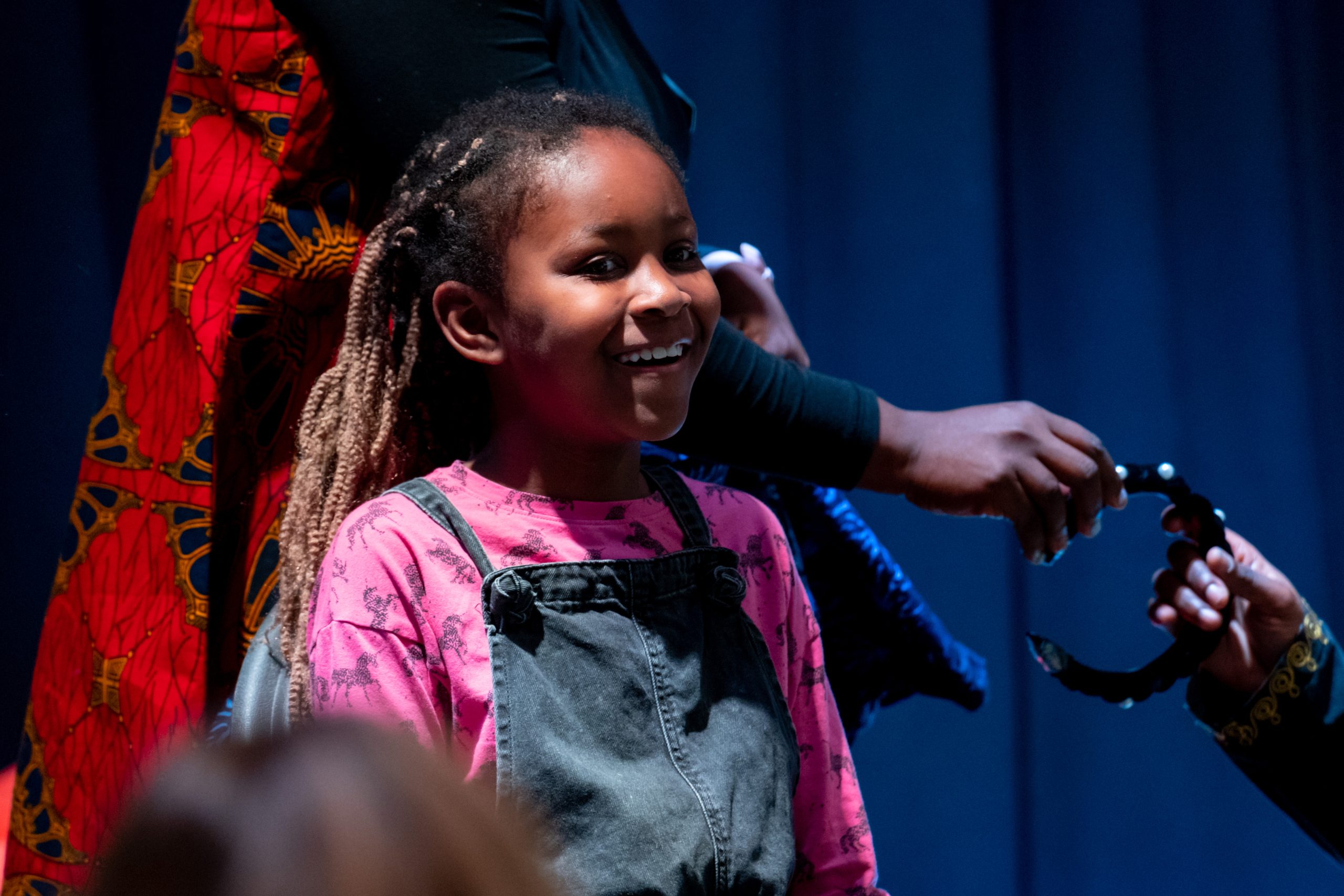
The lights dim in the theatre. I have brought my children and partner to watch a production at Theatre Hullabaloo, Darlington, a place I had grown to love through my research around their suite of inclusive programmes.
As the actors came out on stage, each one introduces themselves. They describe who they are playing, what their costumes look like and even where the set is located on the stage.
The way in which the actors are able to describe things for children with visual impairment not only made it more accessible to them, but I could see my own sighted children become more interested and enquiring with every new description.
The value of creativity
I thought about the hundreds of schools that came through the theatre doors; I had always known that, through my research with Theatre Hullabaloo, that they saw the value in bringing creativity and learning to children of all ages and abilities. But this moment impacted my own children and brought the attention to detail home for me as a parent, rather than a researcher.
One of the things I like to remind parents is that, for some infants and children, it could be the very first time they are engaging with certain actions or sounds
Theatre Hullabaloo is a special place for many reasons. The friendly and knowledgeable hosts greet schools and parents as they come through the doors and, at the heart of the building, they have an artist-led creative play installation that changes with the seasons. Their plays and programmes make the space perfect for communities.
The thing that stands out though is their bespoke inclusive practice. They have a suite of different programmes designed specifically to give differently-abled children and their parents opportunities to learn and thrive through the arts.
One of those programmes is Let’s Play, a socially-prescribed creative play intervention for new parents of 0-3-year-olds. Social prescription is a way to connect the most vulnerable families to community support. It is semi-structured with a professional musician leading families in song for the first half-hour.
This is followed by time for curated free play, with materials based on the songs from the session. More singing winds down the session, to help the transition to home-time. I explained to parents what was going on developmentally with the children while all of the music and play happened.
No pressure or stigma
One of the things I like to remind parents is that, for some of the infants and children, it could be the very first time that they are engaging with certain actions or sounds. Hearing words in context helps with later expressive verbal ability and spending this time with your children fosters attachment.
In one of our cohorts we had a deaf child, so I explained that we could use vibration to help the child learn about rhythm.
During the pilot sessions, I was there not only to evaluate Let’s Play itself, but I also brought my own son, who was still in this age group at the time. I spoke to parents and analysed the answers to their questionnaires. Many of the parents attending suspected their child might be neurodivergent, while others had children with developmental delay.
The thing that parents took away with them from the programme was that this was a trusted and tranquil place where their children could be themselves without any stigma.
One parent explained this feeling as, “not overwhelming like other groups. Not as chaotic…good to talk to others with similar experiences.” Others commented on their children crawling around or crying, and how they would feel stigma at another group, but there was no pressure or shame associated with baby behaviours in Let’s Play. I also felt this as an insider with my own child attending the sessions.
As Let’s Play socially-prescribed creative play has grown and changed, I’ve been able to find that it not only impacts infants and young children’s learning, but it also improves parents’ wellbeing.
My colleague, Susanna Kola-Palmer, and I measured postnatal depression symptomology in parents attending the programme on the first and last weeks. Their postnatal depression scores significantly decreased throughout the six weeks of sessions and this was regardless of the age of their child and whether they had previously attended another Let’s Play programme. We also found that although parents didn’t come to the intervention for social opportunities, these very opportunities connected them and became their favourite part of the experience.
There are other inclusive programmes at Theatre Hullabaloo, in which accessibility is woven into the very fabric of the organisation, through high-quality performances and plays, which foster imagination and creativity. These enhance the experiences of all children and families.