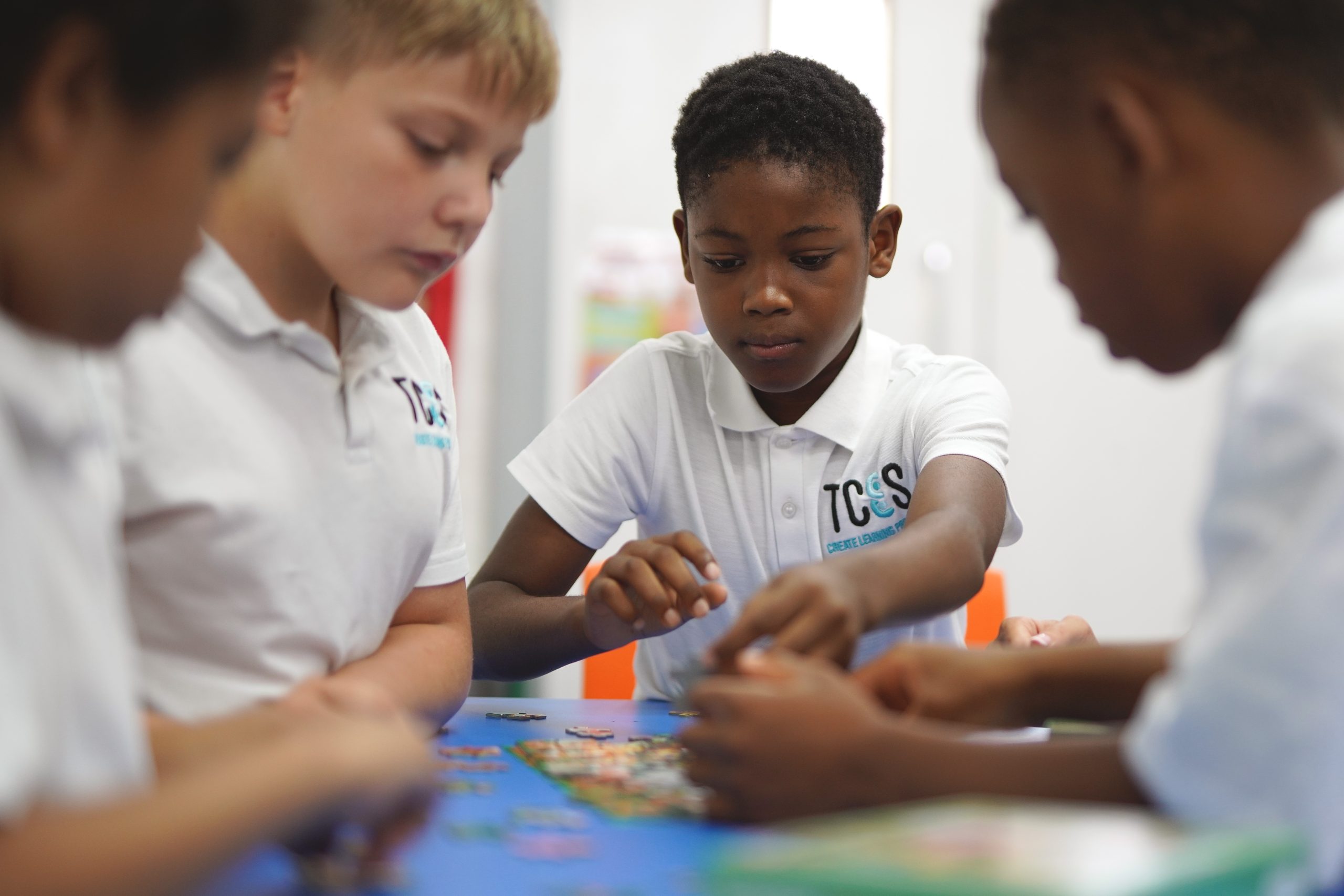
Thomas Keaney has never expelled a single student since he set up his social enterprise for children with acute special, emotional and mental health needs 25 years ago.
It is a statistic that is a huge source of pride for the executive of TCES, which runs five specialised schools and services in London, and has educated more than 3,200 pupils since its inception.
Now his staff are coaching and training other schools around the country in its practices, to ensure as many young people as possible remain in education, for as long as possible.
“We have an epidemic of absence in schools, which is the worst it’s ever been and is quite shocking,” he said. “In the 25 years we have existed, we have not expelled a single child, so we consider ourselves to be much further downstream than most schools.
“By the time pupils come to us they will have already been expelled from school three times on average and have been out of education for 18 months. So, we are dealing with a very complex set of challenges.
“Our mission is to have inclusive practices that are sector-leading and to promote them across the country. Here, we never ever give up on a child.”
Keaney believes every school should be fully inclusive, not merely as a policy but in practice. That means having staff trained in the appropriate teaching methods and strategies and making adaptations for pupils with disabilities or neuro-diversities so that they can access the curriculum.
And it means no longer expelling them as an alternative to offering support.
“Our students already come from a place of disadvantage, often socio-economically, but they might also have a special need, or be in the public care system,” Keaney said. “Which means they experience disadvantage, upon disadvantage, upon disadvantage. It can be a bit Dickensian.”
When Michael Gove said he didn’t care about happiness, just to produce high-achievers, many of us knew we were in for a rough ride
Keaney and his staff of experts at TCES have come up with an inclusion charter which is aimed at improving outcomes and reducing exclusions and increasing attendance in all schools. The charter has six guiding principles:
A balanced approach
A cohesive approach to education where the fair admission of all pupils lies alongside pupil belonging, wellbeing and attainment, according to each child’s ability. “There has to be a level playing field with every school takes in their fair share of pupils with neurodiversity or SEND,” Keaney. “We cannot continue to have covert selection and gaming of the system.”
A sense of belonging for all
An educational environment which supports and values the incredible potential in all students, providing a ‘real’ voice, participation and identity, especially for those at risk of exclusion or disengagement. “Attainment isn’t the be-all and end-off of everything,” Keaney said. “As important as attainment is having their mental health needs supported and met, so that children can make and sustain relationships for the future. When Michael Gove said he didn’t care about happiness, just to produce high-achievers, many of us knew we were in for a rough ride.”
Addressing root causes
Authentic inclusion expertise ensures speed and accuracy in early intervention through proactively assessing and addressing the unique strengths and needs of each individual child. “These children might be the Einsteins or Mozarts of the future, but we will never know if we keep dropping them and dumping them from school. They have talents and gifts if only we bothered to look.
“We need early intervention that doesn’t have a two-year waiting list attached to it.”
Deploying specialist expertise
Develop and deploy best practice and evidence-based inclusion and SEND models by creating learning partnerships across specialist, alternative provision and mainstream education to put the child at the centre of the whole education ecosystem. “Our pupils need someone who cares about them and will go the extra mile,” Keaney added. “This must be built into the system. Special schools have this expertise and should be made responsible for driving this expertise, so that all teachers start to understand and can manage children who are more complex.”
Building relationships with families
It takes a village to [teach] a child. Full voice, participation, training and support for all Parents/Carers. The creation of real inclusion through a FAST (Families and Schools working Together) ethos and plan that positively impacts pupils at risk of exclusion or disengagement. Inclusion does not end at the school gates. “In the UK, schools still operate on a 150-year-old pedagogy where the parents should be quiet because the experts are the ones in front of the class,” Keaney said. “Families must be the centrepiece of the strategy. If necessary, we should train and support them so they can be the effective collaborators with the school.”
‘We Never Give Up’ – a truly authentic commitment to inclusion
Relational Inclusion and therapeutic education are forensically designed into every process across the whole school community, where every child has access to at least one adult, to relentlessly care for them, love them and above all invest in them. In other words: “stop giving up on the children, stop off-rolling or dumping them on someone else,” Keaney said.
Since launching its charter, and following a successful conference earlier this year, TCES is now training and upskilling teachers in mainstream schools to create more inclusive environments.
“Sometimes it just involves tweaking a few policies and practices and being honest about what you are doing as a school,” Keaney said. “We have had schools reflecting and acknowledging that they have been running an academic hothouse with little thought of the impact on children. Schools can be on very different journeys as they work towards greater inclusion.”
*For further information about TCES and training opportunities, go to https://www.tces.org.uk/
An earlier version of this article was published by School Management Plus.