Alternative providers do not know enough about their pupils and are “shouldering the burden” of the outside problems their students face, according to a new report.
The study, from the Children’s Commissioner for England, found that one in three alternative providers (AP) did not know how many pupils were on their roll, and that they generally “know them less well than special and mainstream school settings”.
APs offer – often temporary – education to around 2% of children in England who have special needs, including behaviour problems, health issues that prevent them from going to school or who have been excluded. There are 334 such settings in England.
Alternative provision settings are shouldering the burden of deep-rooted social problems without the full information or support they need
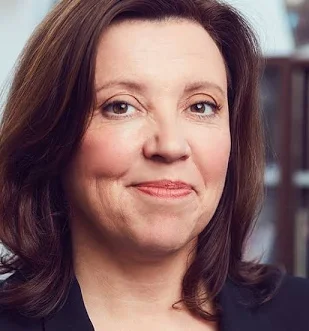
Dame Rachel de Souza (pictured), the children’s commissioner, said information obtained by her office suggested that only about 70% of APs could estimate how many children were on waiting lists for mental health support, and 67% were able to estimate the numbers living in unsuitable accommodation.
The report said: “Given the crucial role of AP in helping children re-engage with education, they need to know their children and share information to provide the support they need to achieve this”.
De Souza wants poverty and social care support to be embedded in AP settings, as well as improved data integration through a “pupil unique ID system”.
“Despite the efforts of the brilliant and skilled professionals who work there, special schools and alternative provision settings are shouldering the burden of deep-rooted social problems without being given the full information or support they need,” she said.
“Too many assumptions are made about these children, and too little is known about the challenges they face beyond the school gates.”
Fragmented systems
In an introduction to the report, she added: “Let me be absolutely and unequivocally clear: this is not the fault of school leaders.
“It is the consequence of a system that is not set up to give those working with children the full picture of their lives. It is the consequence of fragmented systems working in siloes, even for some of the most vulnerable children.
“It is the consequence of a hollowing out of children’s services and exacerbated by the fact that special schools and alternative provision settings are, in many ways, fighting an uphill battle – they are more likely to be situated in deprived areas, with all the challenges that can bring.”
The report found that APs were more likely than mainstream schools to provide food and mental health counselling, but were not able to offer enrichment activities, outdoor spaces or childcare facilities.








