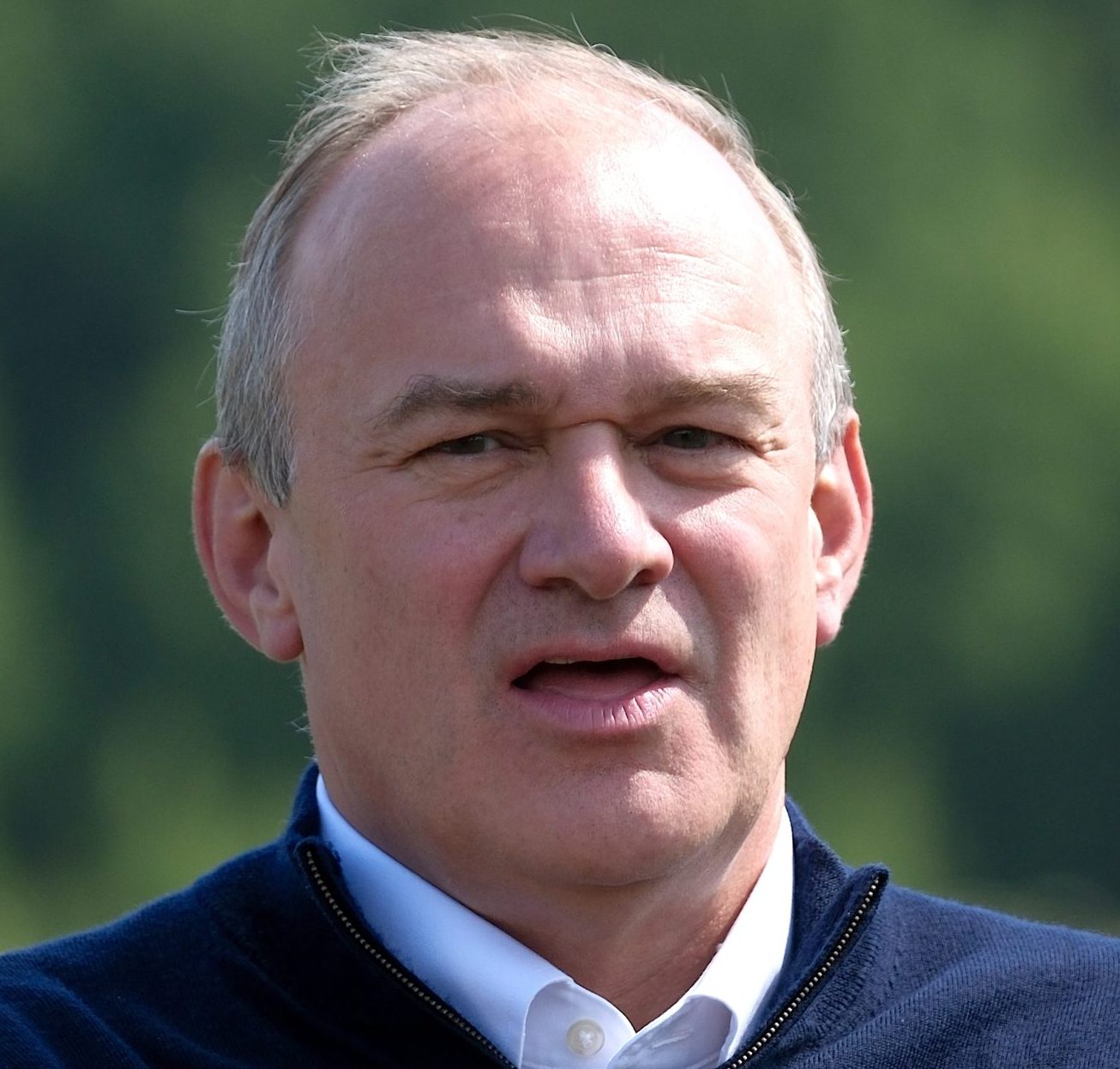
The government’s proposals for children with the most complex needs do not go far enough, according to Sir Ed Davey, the Liberal Democrat party leader.
Davey, who has a son with complex SEND and requires constant care, said elements of the reforms contained in the White Paper were to be welcomed, but warned that plans for children with high-level needs, like were “nonsense”.
His son, John, has an undiagnosed neurological condition affecting mobility, as well as learning and communication disabilities.
Speaking to The i Paper, Davey said: “Just because I’m an MP and my wife’s a councillor … didn’t make it easy at all. We understood the system, and my wife’s also a lawyer, but we had to battle very, very hard.”
Despite being born with complex needs, John was turned down for speech and language therapy until the age of five “because he could swallow his food and his drink and he was deemed not to need it”.
Davey said his “red letter day” was when John finally said the word “daddy” at age eight.
“When you’re dealing with a child of one or two, you’d have thought trying to help them communicate at an early stage when their brain is forming would have been the right thing, but apparently it wasn’t,” he said.
I’m going to look at the whole reform of EHCPs to make sure they do help enough children and there aren’t any gaps
He believes the Government’s plans for early intervention for children with SEND do not go far enough. The Lib Dems want universal screening for SEND, which would enable teachers to assess all pupils aged six to seven.
Under the Department for Education’s proposals, children with education, health and care plans (EHCPs) – which are legal documents that describe a child’s needs and unlock extra funding – will be reassessed at key transition phases.
One in eight children is expected to lose their EHCP during the transition process, and instead be placed on an Individual Support Plan (ISP), which will not carry the same legal weight as EHCPs.
Davey said that his son’s needs are so severe that he will retain his EHCP under the changes, but the idea of a child with complex needs fitting into a predefined package is “nonsense”.
He said: “That might work for a lot of people… I’m not convinced it’s going to work for everybody, because there are a lot of children who don’t fit into need categories, who aren’t diagnosed, who have such complexity of needs that the idea that a predefined package is going to work is just nonsense.
“I’m going to be making sure that we’re looking at the whole reform of EHCPs to make sure they do help enough children and there aren’t any gaps.”
Finding the right environment
Davey said that school was not the right environment for John’s education, and he is now being educated at home.
“We managed to get it through the local authority, first of all, because it saves them money, and also because it’s right for John,” he said, adding that his son began to speak once he was in a calm home environment.
Davey said that if he and his wife had followed the UK guidance on SEND children when John was born, he would have been “mollycoddled and wrapped in cotton wool”, meaning he would probably need a wheelchair today.
But instead, John was taken to the Peto Institute in Budapest – a world-renowned institution specialising in physical rehabilitation for children with motor disorders – where they did four hours of work a day.
“Now, John has progressed so much. He is able to communicate his needs,” Davey said. “I fear that if we did not seek out this therapy, John would be in a very different position now.”
Tailored support should not just be for “the lucky ones who have parents who’ve got resources and will fight hard”, he added.








