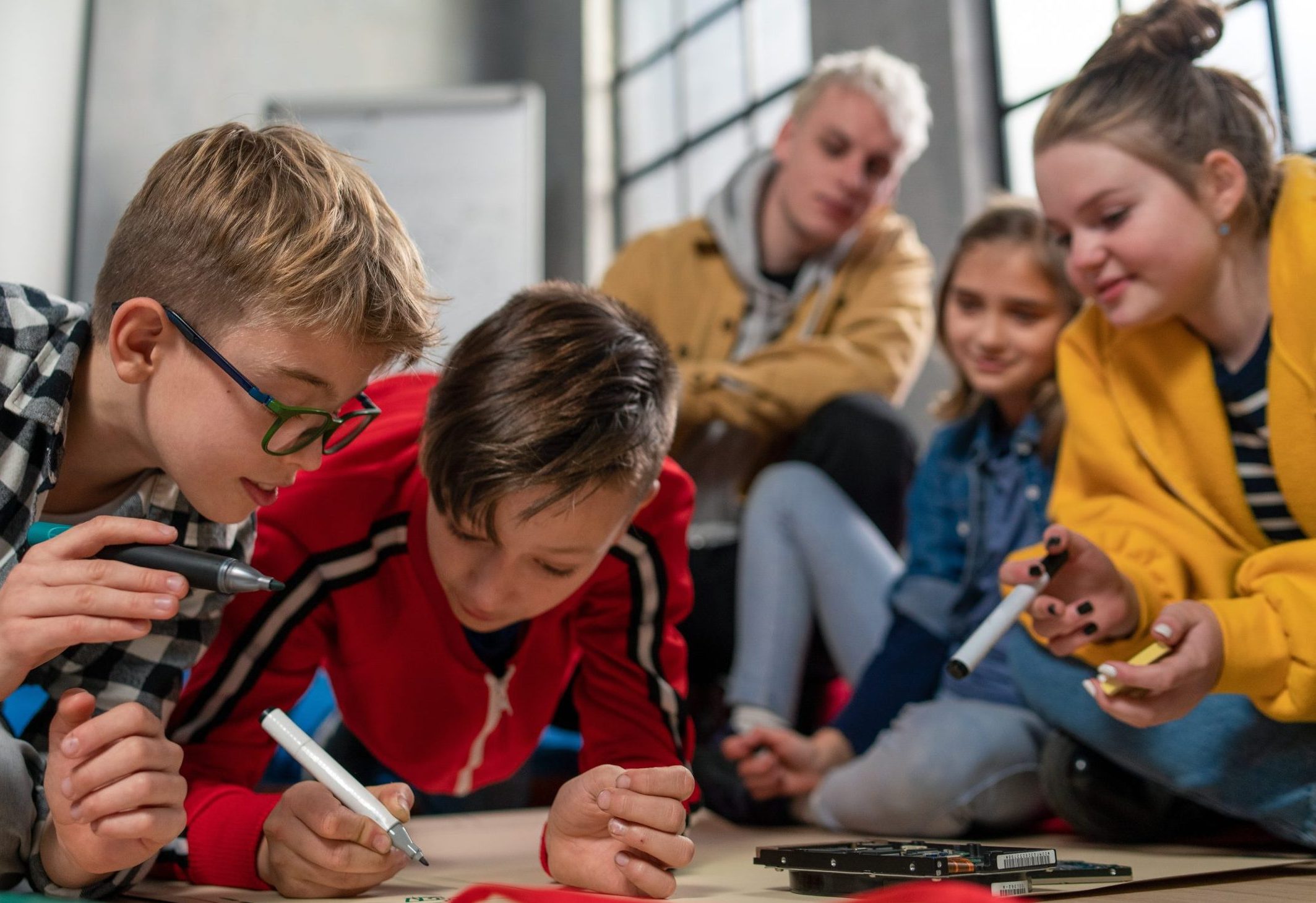
Children who attend special schools have just as many friends as their non-SEND peers who go to mainstream schools, a new study has found.
The research, carried out by the Department of Education, Oxford University, found that the social networks young people experience in specialist settings largely mirror those in the mainstream.
Researchers said this suggests that peer relationship difficulties are less pronounced in environments where children feel more comfortable, are better seen and understood in their needs.
The study, published in the British Journal of Special Education, analysed responses from 156 pupils aged 10-16 years from three special schools in England, each with a different specialism – social, emotional and mental health (SEMH), cognition and learning (C&L) and autism.
The pupils were asked to answer four questions: who do you play with?; who are you friends with?; who is mean to you?; who are you mean to?
They found that the experiences of pupils in special schools did not differ hugely from those in mainstream schools.
False assumptions
Writing for Special Needs Jungle, Dr Lucy Robinson, one of the researchers, said there was often an assumption by politicians and others that children with SEND who attended specialist settings were missing out on peer interactions and friendships.
However, there was little, if any, evidence that this was the case.
She highlighted comments made by the former education secretary, Bridget Phillipson who, when outlining her vision for mainstream inclusion earlier this year, commented that children should be “able to go to school with their friends, in their own community” – as if this was not happening in environments other than mainstream schools.
Robinson said: “Overall, the findings show that positive peer networks (friends and play companions) and negative peer networks (bullying and victimisation) largely mirror social networks in mainstream schools.
“Importantly, pupils in special schools had just as many friends as those without SEND in mainstream schools.
“This suggests that peer relationship difficulties may be less pronounced in these environments than might be expected based on previous research.
“It may be that children in these specialist settings felt more comfortable, seen, and understood in their needs and interactions, which enabled more friendships and less bullying, compared to when pupils with SEND are in a mainstream setting.”
Variations between schools
However, the researchers noticed that there were differences between the school types.
Pupils attending C&L and specialist autism schools experienced “considerably more friendship and play connections” and higher levels of reciprocity than those attending SEMH schools.
However, there was more bullying and victimisation in those schools.
Researchers concluded this might be because pupils attending SEMH were often persistently absent or had personalised timetables resulting in less classroom and play-based time with peers.
Robinson concluded: “This research opens the pathway for future longitudinal social network analyses of social relationships in special schools and their impacts on mental health, peer influence and the movement or stability of friendships.
“Understanding social networks in special schools also provides important information for researchers, teachers and practitioners designing social skills programmes, anti-bullying programmes, or personal, social and emotional development programmes for pupils in the special school context.”








