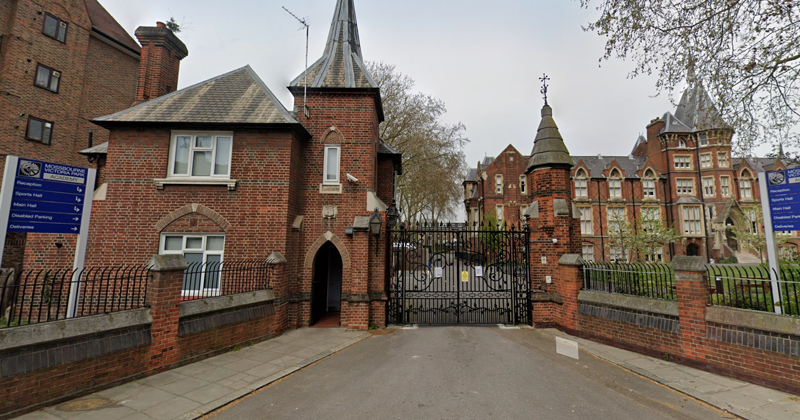
Public humiliation, excessive punishments and discriminatory practices have been highlighted in a new report on daily life for SEND pupils at an academically successful London secondary school.
The inquiry, into Mossbourne Victoria Park Academy (pictured), found a shocking regime of shouting and constant criticism of pupils by senior leaders and some staff.
The Local Child Safeguarding Review, commissioned by the City and Hackney Safeguarding Partnership, followed complaints and concerns by parents about the way the school was being run and children treated.
The report said the findings sit in tension with the school’s strong academic performance, and that success came at a cost to pupil wellbeing.
Toxic, harmful environment
The findings revealed a “toxic and harmful environment for both pupils and staff”, and a “culture driven by excessive focus on discipline and academic achievement by senior leaders, creating an atmosphere of fear and intimidation”
The “authoritarian approach” disregarded “pupil wellbeing and mental health”.
It was reported that some pupils were refused the reasonable adjustments they needed to be able to learn effectively.
“A child with autism, for example, allegedly received no adjustments for managing transitions, leading to dysregulation,” the report said.
“Another child with anxiety was reportedly told not to bring headphones, which they used for distraction, in order to comply with school rules.”
excessive focus on discipline and academic achievement by senior leaders, creating an atmosphere of fear and intimidation
Among the most significant concerns was a practice known as ‘desking’, which involved the removal of a child from class and placing them at a desk in a corridor outside the room of a senior teacher. This was a punishment used for minor offences such as forgetting equipment or looking at the clock.
The sanction led to fears over ‘pupil welfare, learning and equity’ and was said to have a disproportionate impact on vulnerable children, including those with SEND.
The report noted that complaints made to the local authority emphasised that “sanctions were being used liberally, potentially harming neurodiverse children whose SEND needs were not being met, leading to punitive responses rather than appropriate support”.
Inflexibility and non-compliance
Staff at the school also complained about the treatment of SEND pupils, and the “inconsistent and potentially non-compliant support”.
“Concerns raised included EHCPs not being followed (even the legally binding Section F) and a “plummet” in the number of teaching assistants, leaving multiple EHCP pupils unsupported in class,” the report said.
“The Federation’s attitude toward the SEN department and its funding was also raised as a key issue.
“Staff reported a policy of inflexibility regarding catering to SEND status, with pupils being denied time-out passes or fidget toys (like blue tac), despite recommendations from external health professionals like CAMHS.
“Furthermore, one member of staff alleged that they were advised to “just shout at her” when engaging a senior member of staff about how to manage a pupil with an EHCP who was experiencing emotionally based school non-attendance (EBSNA).
The report said that several agencies had raised concerns to the review about pupil welfare and support for pupils with SEND, including the Metropolitan police. “A recurring theme across all these reports was the use of disproportionate and inflexible policies that may be having a detrimental effect on some pupils,” it said.
Some SEND pupils thriving
The report noted that “the average pass rate at GCSE for children with SEND is significantly higher than the national average for all children”, but that the recurring theme was that the “sanctions system is…weighted against these pupils”.
Some parents were happy with the provision for SEND. The report said: “Contrary to some of the concerns raised, several parents of children with SEND (including Autism, ADHD, Dyspraxia, Dysgraphia) reported that their children are thriving.”
Parents highlighted the school’s “proactive and exemplary support”, including swift assessment and diagnoses and the provision of reasonable adjustments.
In a letter sent to parents preparing them for the release of the report, principal Matthew Toothe stressed the academy “has and is taking the review seriously”.
He does not believe parents “will agree with … [its] conclusions” otherwise they “would not entrust [their] children to our care on a daily basis”.
He added staff would not choose to work there and “the countless external professionals who visit the academy … would not have stood by and been complicit in a system which they thought was causing harm”.
Toothe said the City and Hackney Safeguarding Children Partnership had previously “confirmed” that “none of the accounts” indicated a “child was at any immediate risk of significant harm”.
A spokesperson for the Department for Education said: “These findings are serious and deeply concerning.
“Every child deserves to learn in a calm classroom, and school behaviour policies should promote safety, respect, and a positive environment for both staff and pupils, tailored to the needs of their pupils and wider community.”








