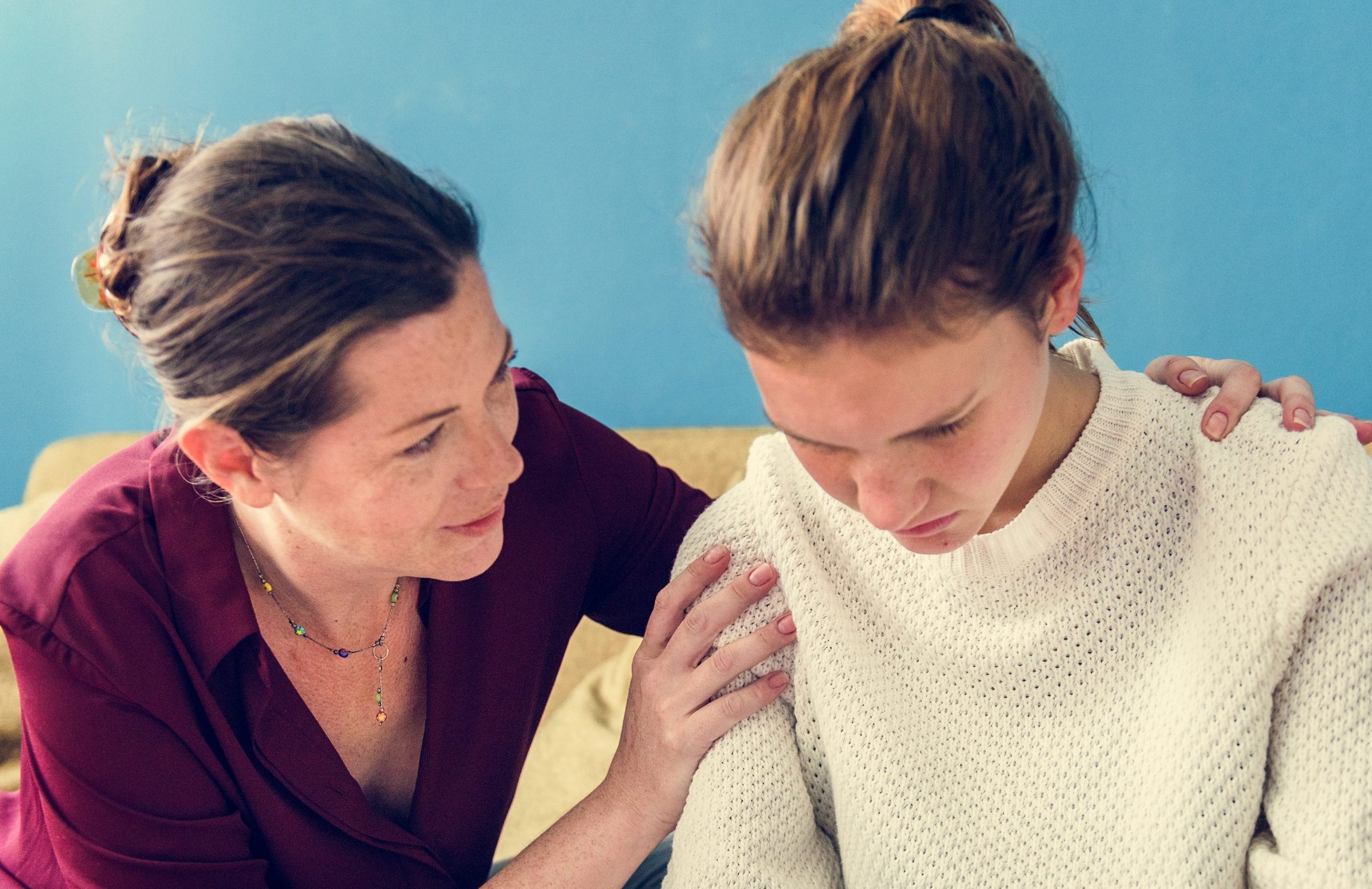
I often think of neurodivergent young people as canaries in the coal mine, gifted with a different song. When you listen carefully, you can hear an entirely new perspective on the world.
Like canaries, they have unique and sensitive sensorial abilities, much more than the rest of us.
Through their sharp, uncompromising senses – when given the opportunity – neurodivergent young people reveal the most nuanced colours, sounds, and shapes of this world, that the neurotypical mind cannot fathom.
Seen through their eyes, the world is so much more intricate, unpredictable, and magnificent than most of us perceive it to be.
The trauma and harm of school life
Neurotypical adults who went through the traditional schooling system unharmed – myself included – will not have experienced what can easily harm, traumatise and swallow up our neurodivergent young people in a heartbeat.
As we accept their reality, we go through it and try to figure it out, with them. It is a journey that can take months or years, and it can take many forms and trajectories.
But there is one element that I see time and again with adults who are going through it, and that is grief.
Grief for whatever we believed in about education and schools.
Grief for our dreams for our young people, and grief for us are as educators and parents.
This need not be a sad story though. Grief breaks us and rebuilds us, and it can also enable us to eventually free our wild canaries from their cages (and from the mines).
The five stages of grief
It might be helpful to look at this process using a simplified version of the Kübler-Ross’s (1969) five stages of grief – denial, anger, bargaining, depression and acceptance:
Denial
Our young people may already be beyond this stage when we experience denial, by openly communicating their struggle, masking it, or being in fight-or-flight mode.
So, we have a lot of catching up to do despite feeling confused, shocked or scared.
Our first instinct might be to look away, dismiss the young person’s different reality, or simply try to cling to what we already know. If we went through the system, surely so could they, we tell ourselves.
We might be turning to people we deem authoritative at this stage, following their suggestions that involve pushing our canaries against their will back into the mines, although they might be barely breathing at this point.
Seeing the world through their eyes as fragile, ever-changing, loud, and uncontrolled can shift the ground beneath our feet.
Sadly, the young person, who is already beyond denial, might feel dismissed or gaslighted, retraumatized and abandoned, which will deepen the cracks between them and us.
Anger
Once we start to acknowledge the reality that our young people are genuinely struggling and that the current system is not meeting their needs, frustration and irritation can arise.
Anger at this stage can be directed at the young person: Can’t they try harder? Are they lazy? Can’t they be more resilient?
Or we might feel anger towards the world: What will happen to my young person? Will they ever be able to sit their GCSEs? What kind of future will they have?
We might also lash out towards the professionals around us: Why am I alone in this? Where are they when I need them?
And we might feel anger towards ourselves: How did I not notice what is going on earlier? How did I fail my young person?
Bargaining
Adapting to the new reality of diagnoses, EHCPs and professional support (or lack of) can be confusing, bewildering and exhausting.
We may feel desperate to get our lives back to how they were before – or more accurately, to get our young person back to what we thought they were before. And they may feel the same.
At this stage, we are still under the false hope that the same cage, the same old mine, will be able to produce better solutions. Could teachers do more? A part-time timetable? A different school?
The bargaining can be tormenting. We continuously scan the last years of our lives: What did we do wrong? What’s wrong with our teaching or parenting styles? Should we have been tougher – or softer?
Depression
This stage is often accompanied by isolation. Whether the young person finds themselves unable to attend school, is pushed out or excluded, there is usually a feeling of being rejected from our community.
Relationships with friends at school starts to deteriorate, and the community of adults – friends, extended family, professionals – begins to disintegrate or disapprove.
Many young people may start to withdraw at this stage, experiencing sadness and feelings of helplessness, not leaving their house or room, and sinking into their own world.
As parents, we might also find ourselves overwhelmed, consumed with worry, guilt and loneliness as well.
Acceptance
I did promise a happy ending, didn’t I?
This is where I usually meet enthusiastic, keen, and empowered parents and teachers, ready to part ways with their old belief systems.
They are ready to walk the uncharted path alongside their young person, to re-establish trust with them, advocate for them, and to challenge the system, whether within it or from the outside.
Our neurodivergent young people need autonomy, coupled with trusting relationships
This is when you start seeing sparks of curiosity, waves of deep research – and a huge question ready to be asked:
“Is school the only way?”
It is at this point that we begin to trust – when we let our canaries lead us into a new world of otherness, even if this is an ever-changing flight route for us.
We do that because controlling them and fearing the system does not work.
I learned the hard way that when fear, ego and the need to control move aside, what comes in instead is the ability to trust young people to make their own way and grasp opportunities that await them.
When you take a step back and look at our schooling system you immediately see how the school environment was designed for very narrow purposes, which have very little to do with preparing young people for life as adults today.
Our young people often adapt to the world more easily when living in wider contexts, such as work, self-directed communities or higher education (see, for example, the writings of Peter Grey and Paul Tough).
More importantly, they need autonomy. Autonomy, coupled with trusting relationships, is what will eventually open their cages and free them from the mines.
One last word of caution: young people who are finding their way out of school are, sadly, more often than not, scarred by the system.
They will often suffer from poor mental health, low self-esteem, burnout and sometimes even PTSD. This makes our journey towards opening their cages longer, less linear and much harder.
So, as well as trust, optimism, and empathy, we also need patience and time.
But I promise it will be worth it.
*If you are interested in more reading about neuro-affirmative approaches to learning, have a look at our recommended reading list: https://www.oxford-harbour.org/recommended-reading.